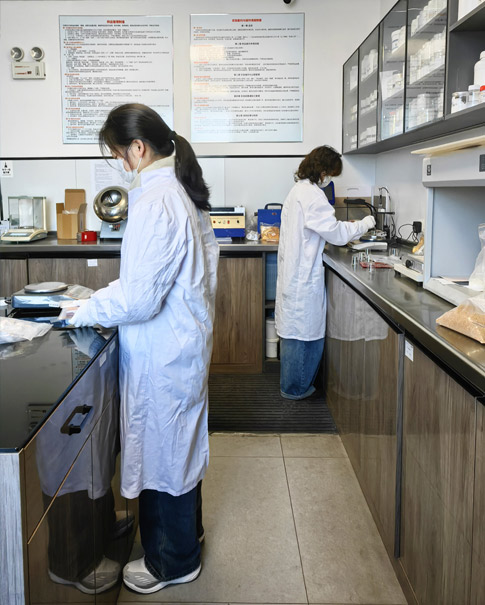
A veces, la espuma simplemente reduce la eficiencia de la producción. En casos más graves, provoca desbordamientos, lecturas de volumen erróneas, poros, mala nivelación, aglomeración de pigmentos, alta viscosidad del sistema, defectos en el recubrimiento y calidad inestable del producto 2 .
Ahí es donde entran en juego los antiespumantes.
Un antiespumante no es solo un producto químico que elimina las burbujas. Correcto selección del agente antiespumante Puede mejorar la estabilidad del procesamiento, reducir los defectos superficiales y ayudar a los fabricantes a producir un producto final más liso, limpio y fiable.
Pero no existe un antiespumante universal. Un producto que funciona bien en un recubrimiento a base de agua podría producir cráteres o neblina en otro sistema. Un antiespumante con gran poder antiespumante puede no proporcionar una buena supresión de la espuma a largo plazo. Por lo tanto, la clasificación y la selección deben ser correctas.
¿Por qué se produce espuma en los sistemas industriales?
La espuma se forma dispersando un gas en un líquido y estabilizándolo con sustancias tensioactivas.
Por lo general, la espuma no es estable en agua pura. El problema surge cuando hay tensioactivos, agentes humectantes, emulsionantes, resinas, proteínas, dispersantes u otros materiales tensioactivos presentes. Estas moléculas se difunden fácilmente hacia la interfaz gas-líquido y forman una película elástica alrededor de la burbuja de aire.
La viscosidad superficial, la viscosidad del líquido y el efecto de tensión superficial autorreparable de la película la hacen resistente a la ruptura. Esto estabiliza las burbujas e impide que colapsen.
La espuma se genera frecuentemente en procesos de dispersión a alta velocidad, molienda de pigmentos o aplicación de resina en recubrimientos y tintas. Puede producirse a partir de polímeros solubles en agua y mediante agitación mecánica en adhesivos y la fabricación de papel. Es común encontrar espuma asociada a tensioactivos, materia orgánica y aireación continua en el tratamiento de aguas residuales y la limpieza industrial.
En resumen, la conclusión es sencilla. Dondequiera que se combinen aire, agitación y materiales tensioactivos, es probable que se produzcan problemas de espuma.
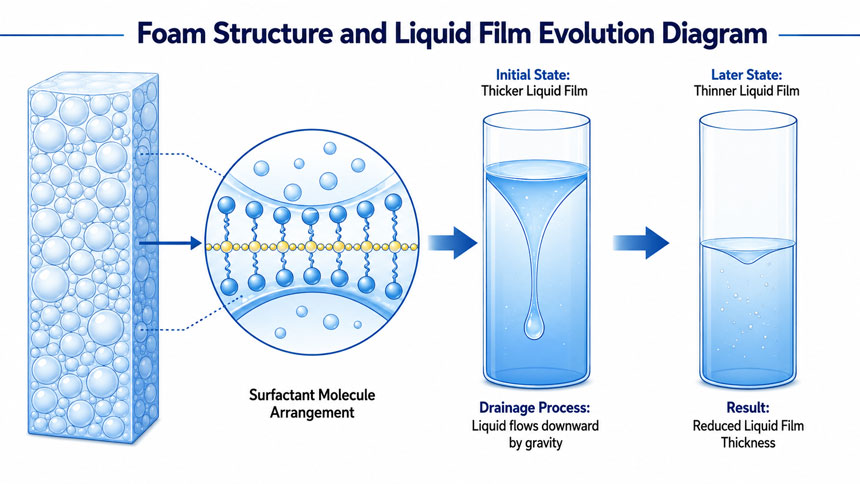
Figura 1: Estructura de la espuma y evolución de la película líquida
¿Cómo funcionan los antiespumantes?
La función principal de un antiespumante es destruir o debilitar la película de espuma estable.
El antiespumante suele ser compatible solo con un sistema de espumado limitado. De esta forma, puede penetrar en la película de burbujas en lugar de disolverse completamente en el líquido. Al entrar en contacto con la superficie de la espuma, rompe la tensión superficial local, debilita la elasticidad de la película, adelgaza la película líquida o añade partículas hidrofóbicas que ayudan a reventar la burbuja.
En la práctica, los aditivos para el control de la espuma pueden actuar de tres maneras.
Desespumante (agente antiespumante)
Los antiespumantes se añaden cuando la espuma ya se ha formado. Su principal función es el rápido colapso de las burbujas. Son útiles en condiciones de alta formación de espuma, como en la producción de recubrimientos, tanques de aguas residuales, limpieza industrial y mezclas a alta velocidad.
Control de espuma (agente antiespumante)
Los supresores de espuma se añaden antes o durante la producción para evitar que la espuma se vuelva a formar. Son importantes para sistemas de larga duración como la fabricación de papel, adhesivos, tanques de limpieza circulantes y el tratamiento de aguas residuales.
Desaireadores (Agente desaireador)
Los desgasificadores hacen que las pequeñas burbujas del líquido se fusionen en burbujas más grandes. Estas burbujas más grandes son más ligeras y salen del sistema. Esto resulta útil cuando la microespuma provoca poros, poca transparencia, brillo deficiente o defectos en el recubrimiento.
En muchas fórmulas industriales, la mejor solución no reside en una sola función, sino en un equilibrio entre una rápida eliminación de la espuma, una supresión de la espuma a largo plazo y una buena compatibilidad.
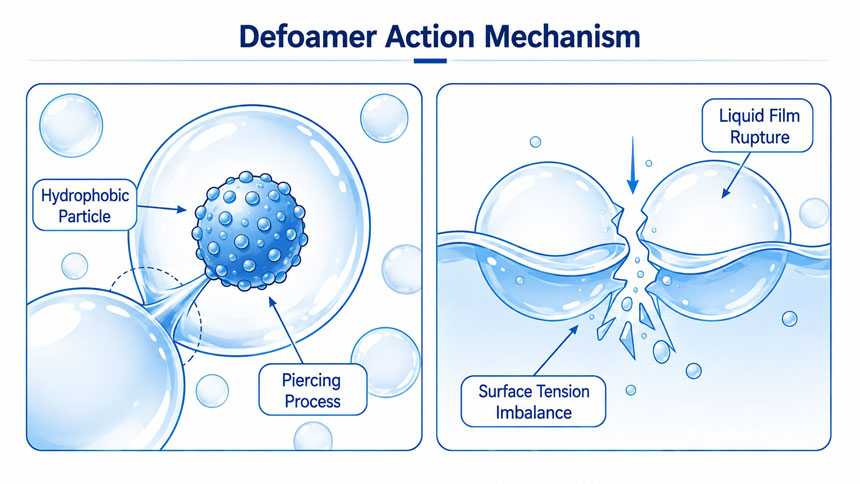
Figura 2: Mecanismo de acción del antiespumante
Los principales tipos de antiespumantes
La mayoría de los antiespumantes comerciales son mezclas de formulaciones. Estas pueden incluir materiales antiespumantes activos, excipientes, partículas hidrofóbicas, emulsionantes y estabilizadores. Los siguientes tipos se utilizan ampliamente en sistemas industriales.
Antiespumantes de silicona
Antiespumantes a base de silicona Generalmente se basan en aceites de silicona, a menudo con sílice hidrofóbica u otras partículas. Tienen baja tensión superficial, rápida eliminación de espuma, gran poder antiespumante y buena resistencia al calor.
Se utilizan ampliamente en recubrimientos, tintas, procesamiento textil, fluidos para el trabajo de metales, tratamiento de aguas industriales y otros sistemas donde se necesita un control rápido de la espuma.
La limitación radica en la compatibilidad. En recubrimientos y tintas, una sobredosificación o una mala compatibilidad pueden provocar cráteres, ojos de pez, pérdida de brillo o defectos superficiales. Por lo tanto, siempre se deben probar los antiespumantes de silicona en la fórmula final.
Antiespumantes de poliéter
Los antiespumantes de poliéter suelen estar basados en copolímeros de bloque de EO/PO. Se caracterizan por su capacidad para suprimir la espuma a largo plazo, su buena compatibilidad y su rendimiento estable en numerosos sistemas acuosos o alcalinos.
Puede que no disuelvan la espuma tan rápido como los antiespumantes de silicona. Su principal ventaja es su eficacia antiespumante a largo plazo.
Se utilizan en la fabricación de papel, la fermentación, la limpieza industrial, los detergentes, el tratamiento de aguas residuales y en sistemas alcalinos donde la espuma se reutiliza continuamente.
Antiespumantes a base de aceite mineral
Los antiespumantes a base de aceite mineral suelen estar basados en aceite blanco o parafina líquida, y contienen partículas hidrofóbicas, amidas grasas u otros agentes activos.
La rentabilidad es una gran ventaja para ellos. Se utilizan habitualmente en aplicaciones industriales generales, aditivos para cemento, recubrimientos de bajo coste, formulaciones agrícolas y sistemas de baja cizalladura.
Las desventajas son: un efecto antiespumante inferior, un tiempo de supresión de espuma más corto, la posibilidad de que aparezca turbidez y una baja idoneidad para sistemas transparentes o de alto brillo.
Antiespumantes de silicona modificados con poliéter
Los antiespumantes de silicona modificados con poliéter combinan el rápido poder de ruptura de la espuma de la silicona con la compatibilidad y la supresión a largo plazo de la química del poliéter.
Este tipo se utiliza con frecuencia en sistemas de alto rendimiento, ya que ofrece un mejor equilibrio entre eficiencia y compatibilidad. Resulta beneficioso para recubrimientos a base de agua, tintas de alta calidad, acabados textiles, productos químicos electrónicos y otros sistemas que requieren una buena eliminación de espuma y un bajo riesgo de defectos superficiales.
La principal desventaja es el mayor coste, pero el valor general de la formulación puede mejorarse reduciendo los poros, los cráteres y las repeticiones de trabajo.
Antiespumantes de polímeros y compuestos sin silicona
Algunos sistemas no admiten silicona debido a problemas de recubrimiento, impresión, adhesión o contaminación superficial. En estos casos, los antiespumantes de polímero sin silicona suelen ser más eficaces.
Los antiespumantes compuestos combinan diversos componentes químicos para lograr un equilibrio entre la rápida eliminación de la espuma, supresión a largo plazo, compatibilidad y control de costes. Se suelen emplear cuando un solo tipo de antiespumante no satisface todos los requisitos de rendimiento.
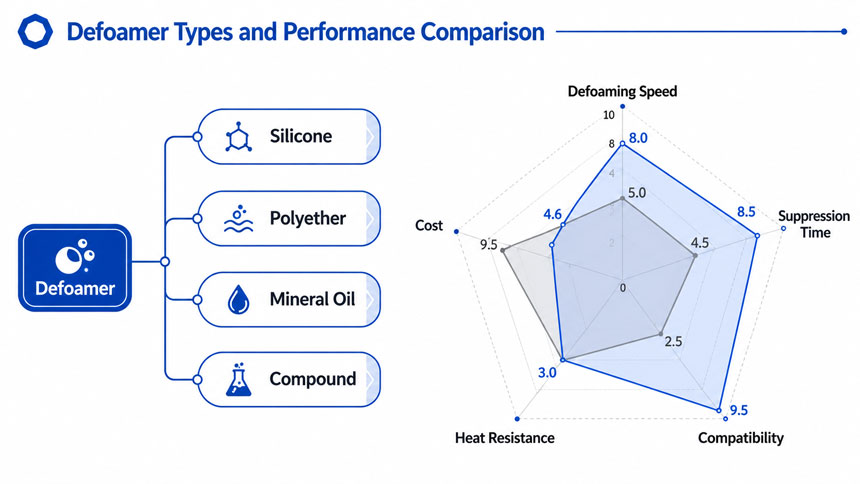
Figura 3: Tipos de antiespumantes y comparación de su rendimiento.
Cómo seleccionar el antiespumante adecuado
La selección de un antiespumante debe comenzar con el sistema, no con el nombre del producto. Un mismo antiespumante puede comportarse de manera muy diferente en distintas formulaciones.
1. Determinar el tipo de sistema
Para sistemas a base de agua, el antiespumante debe dispersarse bien, no separar el aceite y no afectar la apariencia ni la transparencia de la película. Pruebe con silicona modificada con poliéter, poliéter, polímero sin silicona o antiespumantes a base de aceite mineral seleccionado.
Para sistemas a base de solventes, el antiespumante debe ser compatible con la resina y el solvente; no debe causar turbidez, flotación, pérdida de brillo ni defectos superficiales. Los antiespumantes de silicona, silicona modificada y polímeros especiales son opciones habituales.
La estabilidad térmica es relevante en sistemas de alta temperatura. Los productos de silicona, poliéter y silicona modificada con poliéter suelen ser mejores que los sistemas básicos de aceite mineral.
En el caso de sistemas transparentes o de alto brillo, la compatibilidad es más importante que la máxima resistencia a la rotura de la espuma.
2. Problema grave de espuma
Utilice un rompeespuma rápido en caso de formación repentina de espuma y para disolverla rápidamente.
Si la espuma se acumula lentamente y durante un largo período de procesamiento, utilice un antiespumante permanente.
Si aún quedan pequeñas burbujas en el líquido que provocan poros o una mala nivelación, utilice un desaireador o un antiespumante con buen rendimiento para la liberación de microespuma.
La pregunta correcta no es "¿Qué antiespumante es el más potente?", sino más bien "¿Qué problema de espuma hay que solucionar primero?".
3. Relaciona la fase del proceso
En las distintas etapas de la producción de recubrimientos y tintas, pueden ser necesarias diferentes estrategias para el control de la espuma.
La fórmula presenta alta viscosidad y una fuerte cizalladura durante la molienda o la dispersión a alta velocidad. Puede ser necesario un antiespumante o desaireador más potente.
La fórmula es más sensible a la formación de cráteres, ojos de pez y pérdida de brillo durante el proceso de dilución o ajuste final. A menudo, un antiespumante de mejor calidad resulta más compatible.
Los poros son especialmente críticos para las tintas y recubrimientos a base de agua sobre madera. En el caso de los recubrimientos a base de solventes y para pisos, es fundamental lograr un desespumado eficaz que se combine con una superficie lisa.
4. Realizar pruebas antes de su uso a gran escala.
No te fíes solo de la ficha técnica.
La prueba de agitación de la botella puede utilizarse para una detección rápida. Añada una cantidad fija de antiespumante. Agite en las mismas condiciones. Compare la altura de la espuma y el tiempo de desaparición.
Una prueba de circulación de aire o de burbujeo es una mejor prueba para la supresión de espuma a largo plazo.
Para recubrimientos y tintas, la prueba final debe realizarse en paneles de aplicación. Se deben verificar poros, cráteres, cambios de brillo, turbidez, nivelación y apariencia del color. Un antiespumante solo es efectivo si controla la espuma sin dañar la película final.
5. Optimizar la dosis y el modo de administración.
Más antiespumante no siempre significa mejor rendimiento.
Una sobredosificación puede provocar cráteres, mala nivelación, pérdida de brillo, flotación o turbidez. En muchos sistemas líquidos, las pruebas pueden comenzar con una concentración del 0,1 % y luego ajustarse gradualmente según el control de la espuma y el aspecto de la superficie.
A menudo es peor añadirlo todo de golpe que hacerlo por etapas. Por ejemplo, parte del antiespumante se puede añadir durante la molienda y otra parte durante el enfriamiento.
El antiespumante puede utilizarse o añadirse durante el funcionamiento en sistemas de circulación como tanques de limpieza, fluidos de corte y tratamiento de aguas residuales. Generalmente, la reposición rutinaria, acompañada de una sencilla prueba de espuma in situ, resulta más fiable.
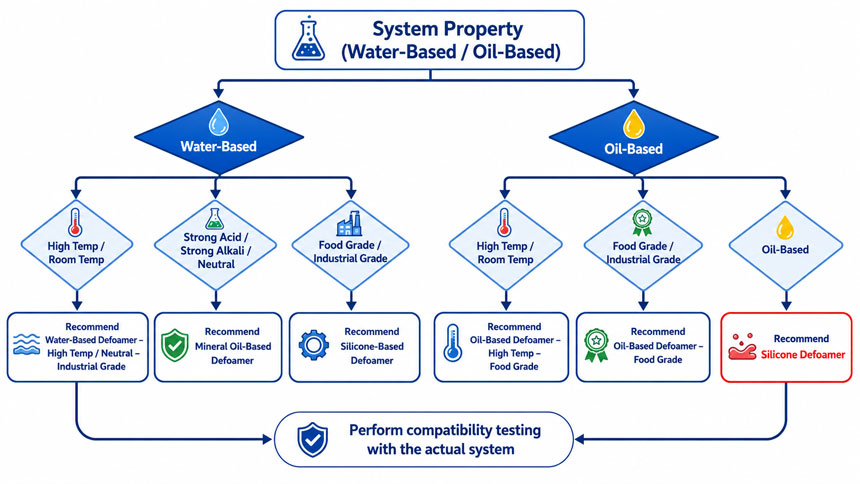
Figura 4: Diagrama de flujo para la selección de antiespumantes
Guía de selección de antiespumantes según la aplicación
| Sistema de aplicación | Problema típico de espuma | Dirección recomendada |
|---|
| Recubrimientos a base de agua | Espuma, agujeros, microburbujas | Silicona modificada con poliéter, polímero sin silicona, emulsión de silicona seleccionada |
| Recubrimientos a base de disolventes | Espuma durante la producción, defectos superficiales | Silicona, silicona modificada, antiespumante de polímero compatible |
| tintas de impresión | Espuma, mala transferencia, agujeros pequeños | Polímero sin silicona, silicona modificada con poliéter |
| Adhesivos | Acumulación de espuma a largo plazo | Poliéter, antiespumante polimérico, antiespumante ecológico a base de agua. |
| Fabricación de papel | Problemas continuos de espuma y drenaje | Poliéter, aceite mineral, antiespumante compuesto |
| Limpieza industrial | Acumulación rápida de espuma | Poliéter, silicona, antiespumante compuesto |
| Sistemas de alto brillo | Riesgo de neblina, cráteres y pérdida de brillo. | Antiespumante de polímero altamente compatible o silicona modificada |
iSuoChem®: Su socio en la selección de antiespumantes
La elección de un antiespumante implica más que solo química. Se requiere comprender el sistema de resina, la fase de disolvente o acuosa, la concentración de pigmento, las condiciones de cizallamiento, el método de aplicación, la estabilidad durante el almacenamiento y los requisitos de la superficie final.
iSuoChem® ofrece soluciones antiespumantes para sistemas tanto acuosos como oleosos (antiespumantes oleosos y antiespumantes acuosos). Sus productos se basan en tecnologías de silicona, polímeros sin silicona, aceite mineral y copolímeros en bloque. Estos antiespumantes se utilizan en recubrimientos, tintas, adhesivos, fabricación de papel, limpieza industrial y aplicaciones relacionadas.
El control de la espuma suele estar asociado a otros aditivos utilizados por los fabricantes de recubrimientos y tintas, como dispersantes, humectantes, niveladores, aditivos de cera y espesantes. Una solución integral de aditivos puede reducir los errores y mejorar la estabilidad de la fórmula.
Un proveedor profesional puede ayudar a los clientes a seleccionar los tipos de antiespumantes adecuados y competitivos. precio del antiespumante, equilibrar la velocidad de eliminación de espuma y la compatibilidad, prevenir defectos superficiales y adaptar el producto a las condiciones reales de producción.
Reanudar
Los antiespumantes son aditivos de baja dosis, pero tienen un efecto significativo en la eficiencia de la producción y en la calidad del producto final.
Método de selección práctico: comprender el sistema, identificar el problema de la espuma, seleccionar el tipo de antiespumante adecuado, realizar pruebas en la fórmula real y optimizar la dosificación cuidadosamente.
El antiespumante adecuado no solo debe eliminar la espuma rápidamente, sino que también requiere un control estable de la espuma, compatibilidad, reducción de defectos superficiales y una producción industrial uniforme.
Preguntas frecuentes (Otras personas también preguntaron)
Antiespumante vs. desespumante: ¿cuál es la diferencia?
Un antiespumante destruye la espuma ya presente, mientras que un antiespumante previene la formación o reformación de espuma. Existen muchos productos comerciales que realizan ambas funciones.
¿Cuál es el mejor antiespumante para recubrimientos a base de agua?
No existe una única mejor opción. Las alternativas más comunes son la silicona modificada con poliéter, el polímero sin silicona y los antiespumantes de emulsión de silicona seleccionados; sin embargo, la elección final dependerá del tipo de resina, el contenido de pigmento, el brillo, el método de aplicación y la sensibilidad a los defectos.
¿Cómo puede un antiespumante provocar cráteres?
Un antiespumante debe ser parcialmente incompatible para penetrar y destruir las películas de espuma. Si es demasiado incompatible con la fórmula, puede migrar a la superficie y crear cráteres, burbujas o una mala nivelación.
¿Qué dosis debo probar primero?
Muchos sistemas pueden comenzar con una concentración de aproximadamente 0,1 % e ir aumentándola gradualmente. Si persiste la formación de espuma, aumente la concentración lentamente. Si aparecen cráteres, turbidez o pérdida de brillo, reduzca la dosis o utilice un grado más compatible.
— iSuoChem: Su socio de confianza para soluciones antiespumantes en recubrimientos, tintas, adhesivos y sistemas industriales.